voziti magazine · Guide
Engine warning light: panic and big bills – or calm and quickly sorted?
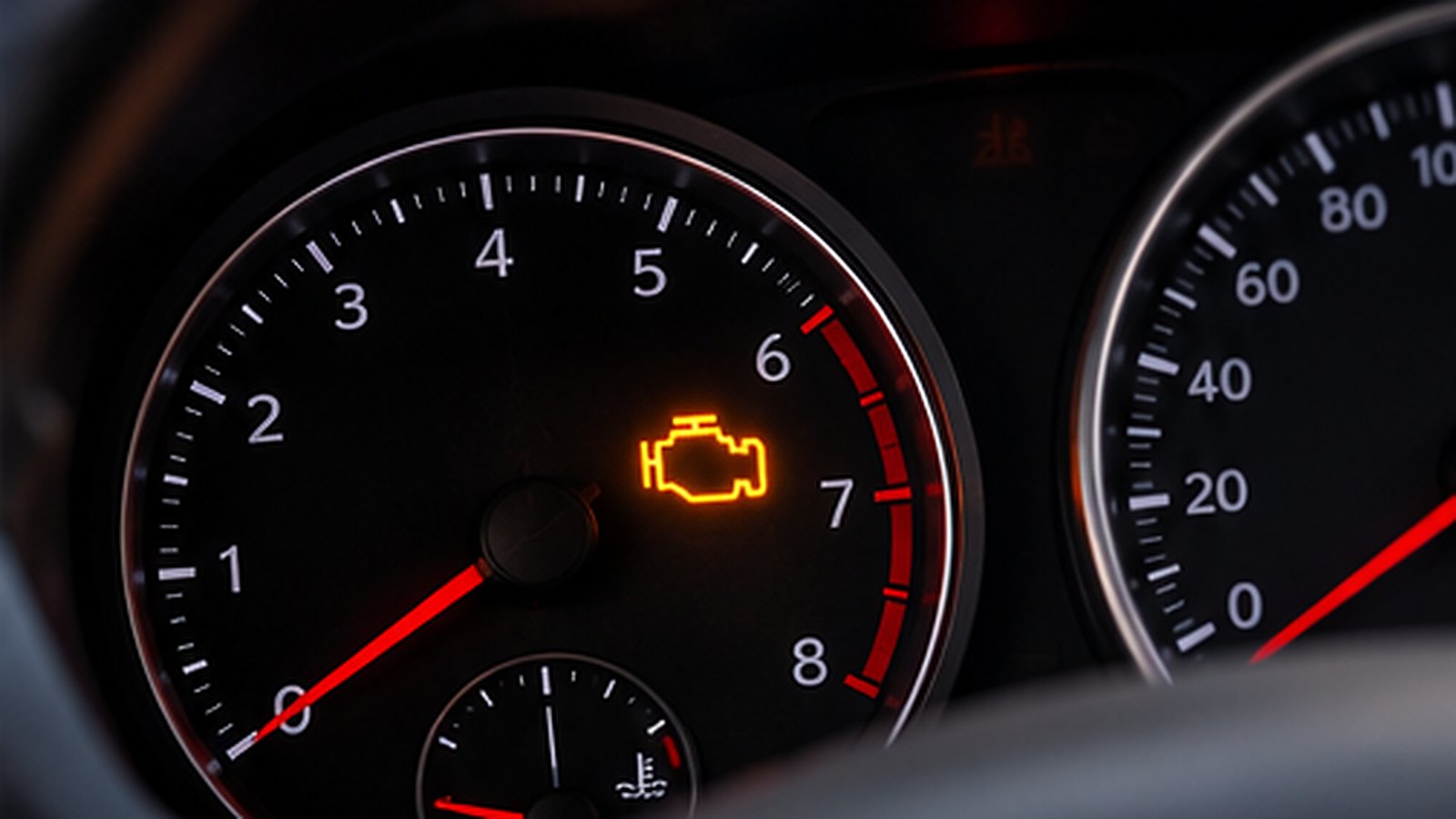
Suddenly the amber engine symbol lights up on the dashboard. For many, the worst-case film starts playing: engine failure, workshop, hundreds of euros. Usually the cause is more harmless – but not always. Here is how to tell what to do.
What the light actually means
The engine warning light is part of the OBD diagnostic system, mandatory in the EU for petrol cars since 2001 and for diesel cars since 2004. The engine control unit constantly monitors everything related to combustion and exhaust: ignition, injection, oxygen sensors, catalytic converter, exhaust gas recirculation, particulate filter. If it detects a deviation, it stores a fault code – and switches the light on. So it doesn’t say “engine broken”, but “something isn’t right here, please check”.
Amber, flashing or red – that’s the difference
- Steady amber: a fault has been stored. You can usually keep driving, but should have it read out soon – within days, not weeks. If the car drives noticeably differently, drive gently at low revs.
- Flashing amber: usually misfires. Unburnt fuel enters the exhaust and can destroy the catalytic converter within a short time. Ease off, don’t accelerate, stop safely soon and call a workshop.
- Red warning lights (oil pressure, coolant, battery): this is serious. Stop immediately in a safe place, switch off the engine and don’t drive on until the cause is clear.
The most common causes
- Fuel cap not closed properly (petrol): the fuel system reports a leak. Tighten the cap – the light often goes out by itself after a few trips.
- Spark plugs or ignition coil: typical with misfires and rough idling. Costs are usually manageable.
- Oxygen sensor or mass airflow sensor: the mixture is off, consumption rises.
- EGR valve or diesel particulate filter: especially in diesels used for lots of short trips. A longer motorway drive sometimes helps the filter burn itself clean.
- Catalytic converter: less common but expensive – often the result of an ignition problem ignored for too long.
Reading the codes: quicker and cheaper than you think
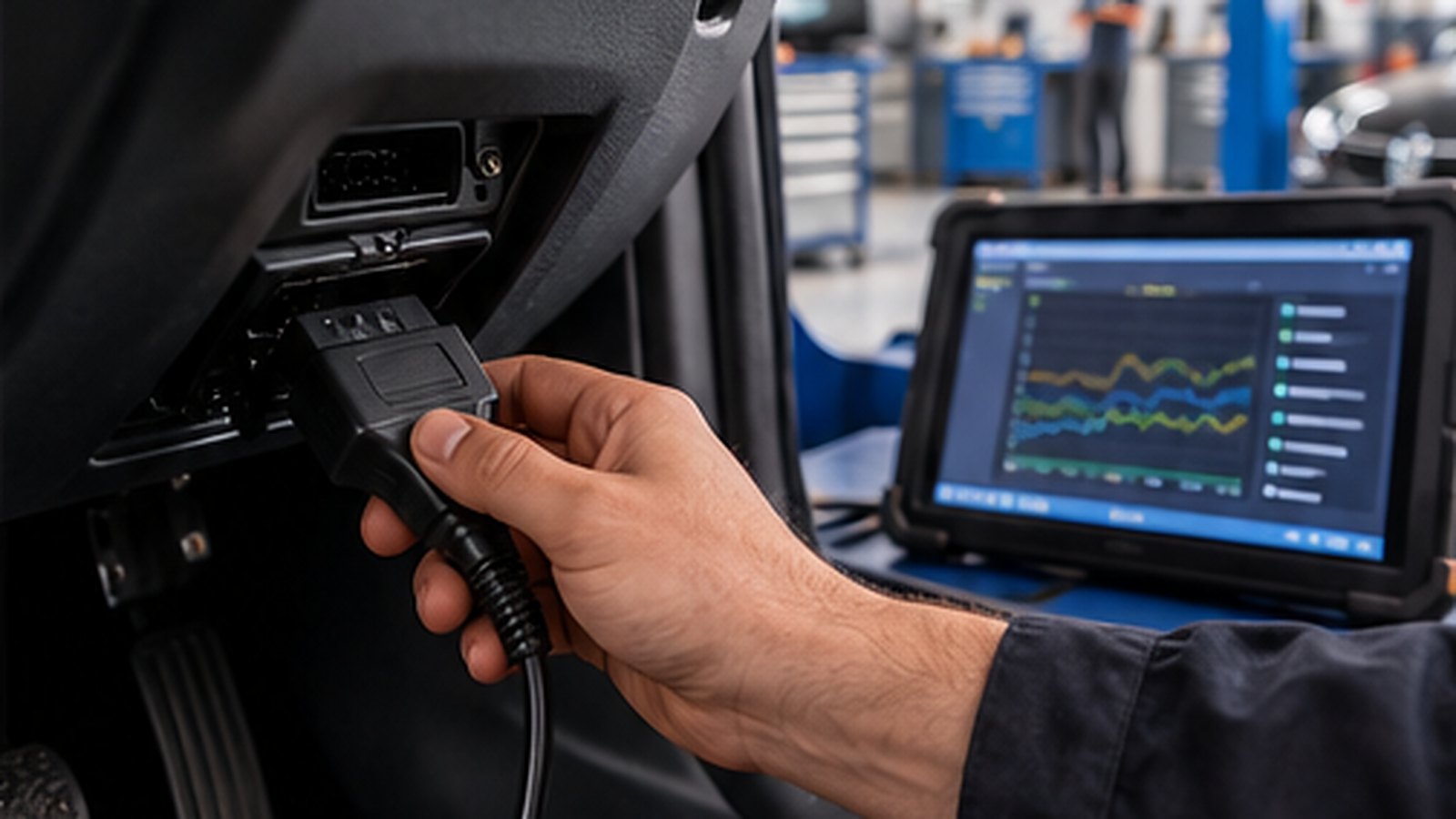
Every car with OBD has a standardised socket under the steering wheel. Workshops read the fault memory in a few minutes – often for a modest fee, sometimes even free if they then do the repair. If you want to check yourself, a simple Bluetooth adapter and an app will get you a long way. The code (for example “P0301” for misfires in cylinder one) points you in the right direction, but doesn’t always identify the faulty part.
And at the roadworthiness test?
The periodic roadworthiness test also checks the exhaust system, in newer cars partly directly via the OBD interface. A lit engine warning light can therefore be assessed as a defect. So have the fault fixed before your appointment – it saves a second visit.
Look closely when buying a used car
- When you switch on the ignition, the light must come on briefly and go out after the engine starts. If it doesn’t light up at all, it may have been deliberately disabled.
- Ask for the fault memory to be read – or bring your own adapter. If faults have only just been cleared, the diagnostic data often shows it (“readiness monitors not complete”).
- Known faults belong in the sales contract. Our free contract templates have dedicated fields for this.
What does it cost in the end?
The range is wide: a loose fuel cap costs nothing, spark plugs or a sensor are usually in the region of a few hundred euros including labour. It gets expensive mainly when a fault is ignored for a long time – a new catalytic converter or particulate filter can cost well over €1,000. The most important rule is therefore also the cheapest: don’t keep driving for weeks with the light on.
Note: this article is for general information and does not replace a diagnosis by a qualified workshop.