voziti magazine · Guide
Finally got your licence! Your first car – and how to get home safely in it
Test passed, licence in your wallet – now all that’s missing is the car. Your first car will be your loyal companion: to work, to uni, to the coast, out with friends. To keep it a good companion rather than an expensive worry, here are tips on buying, the key rules for young drivers in Croatia – and a few honest words about driving itself.
Let’s be clear up front: no, we’re not here to lecture you. You’ve got your licence, you’re an adult and you make your own decisions. But all of us know stories of people for whom one single night changed everything – their licence, their job, friendships, sometimes a whole life. We just want to help you avoid that one mistake that can follow you for the rest of your life. Nothing more.
First question: how much car can you really afford?
The purchase price is just the beginning. A car costs money every month – more than most people think. So work out the yearly running costs first, and only then start browsing listings. A good rule of thumb: keep a buffer of a few hundred euros for the first repairs, because even a well-kept used car usually needs something soon after you buy it.
- Liability insurance (AO): mandatory and often noticeably more expensive for young drivers. In Croatia the premium also depends on engine power in kW – a less powerful car means a lower premium. Compare several insurers and ask about discounts.
- Registration and roadworthiness test: in Croatia registration is renewed every year, together with a technical inspection (tehnički pregled). That is stricter than in Germany, for example, where cars usually need their main inspection every two years.
- Fuel: calculate with real-world consumption, not the brochure figure – and with how much you actually drive.
- Servicing, tyres, little things: regular servicing, winter tyres (or all-season), parking, motorway tolls, car washes. Croatia has its own winter-equipment obligation – more on that in our article on winter tyres.
Which car is right to start with?
For a first car the rule is: easy to see out of, reliable, cheap to run. A small or compact car is easier to park, uses less fuel and is cheaper to insure. 50 to 90 kW is plenty – for the motorway and for a car full of friends.
- Safety first: ESP, several airbags and a good Euro NCAP rating matter more than big wheels. On older cars ESP isn’t always standard – check.
- Parking sensors or a camera save nerves and bodywork – especially in narrow old-town streets.
- Gearbox: if you took your test in an automatic, your licence carries code 78 and you may only drive automatics – that applies across the EU. Check before you buy.
- Popular models have cheap parts and plenty of garages that know them. Exotic cars and very old sports cars are lovely – but as a first car often an expensive hobby.
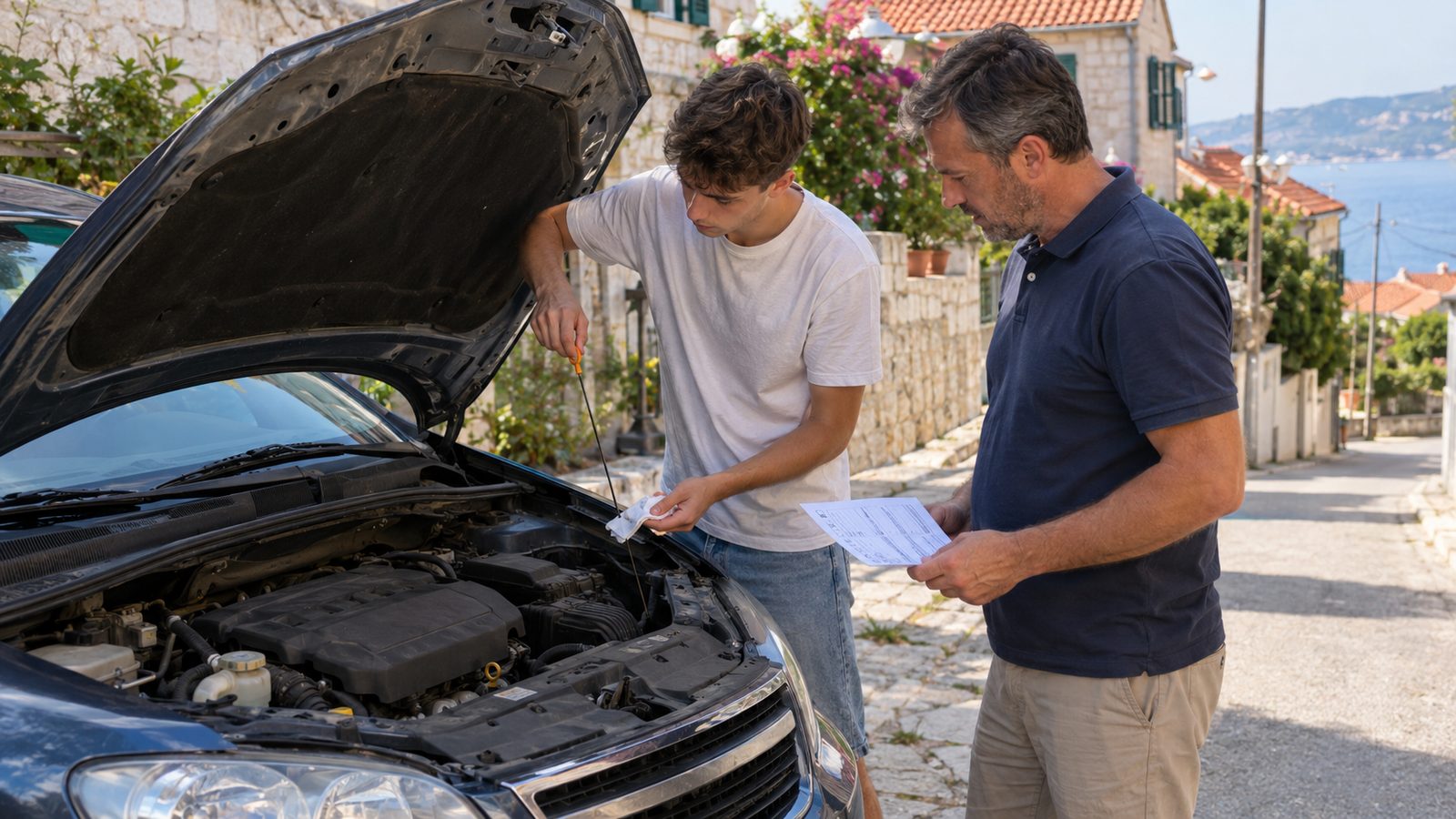
Used car: what to watch out for when buying
Most first cars are used – and that’s perfectly fine. The key is not to buy in a rush and not to fall in love with a car before you’ve looked at it critically. Ideally, bring someone who knows about cars.
- Service book and invoices: prove regular maintenance. Ask when the timing belt or chain was last replaced – that’s an expensive job.
- Mileage: must match the wear on the steering wheel, seats and pedals – and the entries in the service book and inspection records.
- Rust and accident damage: check sills, underbody, wheel arches and panel gaps. Slightly different shades of paint often reveal repairs.
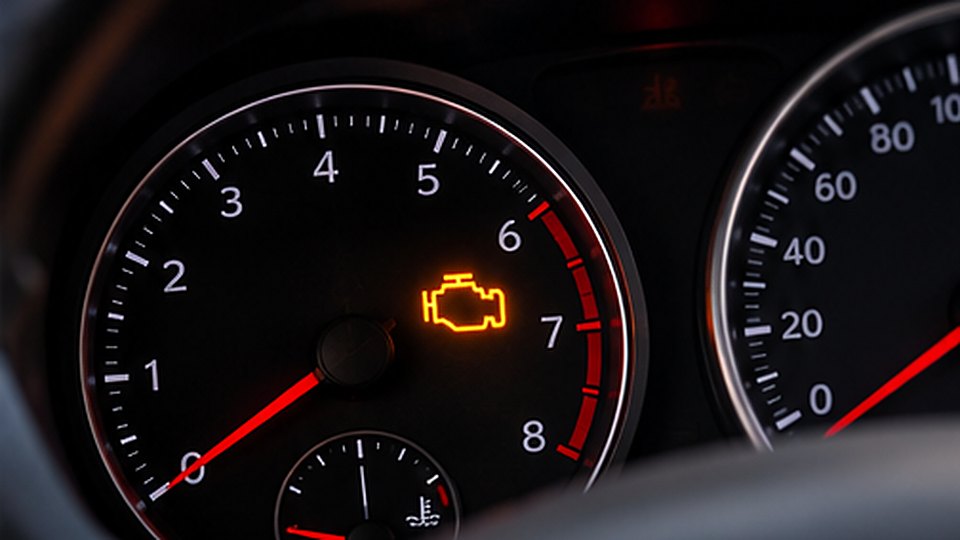
- Test drive from cold: starting, noises, brakes, gearshift, steering that doesn’t pull to one side, no warning lights. If something lights up – read our article on the engine warning light.
- Paperwork: the seller must be the owner named in the registration document (or hold a power of attorney), and the VIN on the car must match the papers. Never pay cash without a receipt.
- A car from abroad? Importing into Croatia means paying PPMV (special motor vehicle tax) and passing type approval – which can raise the price considerably. Details in our article on importing and exporting used cars.
Rules for young drivers in Croatia – and how the neighbours do it
Croatian law has the term “mladi vozač” (young driver): a driver aged 15 to 24 holding a Croatian licence. Special rules apply:
- 0.0 ‰ alcohol: not a single glass. While other drivers have a 0.5 ‰ limit, a young driver may have no alcohol in their blood at all.
- Stricter penalty points: a young driver loses their licence at just 9 penalty points – other drivers at 12.
- A stubborn myth: the 80 kW limit for young drivers was abolished back in 2015, and the special speed limits (80/100/120 km/h) no longer apply since 2018. Today the same limits apply to you as to everyone – which doesn’t mean you have to max them out.
For all drivers in Croatia the following also applies: during winter time (from the switch to winter time until summer time) daytime lights are mandatory, from 15 November to 15 April winter equipment is required on designated roads, phones only hands-free, and the car must carry a first-aid kit, warning triangle, hi-vis vest and spare bulbs (except with xenon and LED lights).
Driving into a neighbouring country? Careful: many countries have rules for novice drivers that Croatia doesn’t – and vice versa. The law of the country you’re driving in always applies. A few examples:
- Slovenia: 0.0 ‰ for novice drivers.
- Austria: probationary licence with a 0.1 ‰ limit – and tougher consequences for offences during the probation period.
- Germany: a two-year probation period; anyone on probation or under 21 must drive at 0.0 ‰.
- Italy: for the first three years after the test there’s 0.0 ‰, lower speed limits on motorways and expressways, and power limits for the vehicle.
- Serbia: probationary licence with additional restrictions, including 0.0 ‰.
Alcohol and drugs: zero is the only right number
The legal limit for you is 0.0 ‰ anyway – but this isn’t just about the fine. Even small amounts of alcohol slow your reactions, narrow your field of vision and, most dangerously, give you the false feeling that you’re in control. For young drivers who still lack experience, that combination ends in tragedy every single year.
Watch out for the “morning after”, too. Your body breaks down alcohol slowly – roughly 0.1 to 0.15 per mille per hour. Coffee, a shower or breakfast don’t help. If you drank late into the night, you can easily still have alcohol in your blood on the way to work or school next morning.
Drugs are off limits – for all drivers, whatever their age. Cannabis, cocaine and other drugs change perception and judgement unpredictably, especially combined with alcohol. Traces can be detected long after you “don’t feel anything any more” – with cannabis a day or more later. Be careful with medicines too: some allergy, sedative or pain medications make you very drowsy. Read the leaflet – and ask your doctor or pharmacist.

The consequences go far beyond the fine: losing your licence, criminal proceedings if someone is hurt, and after driving under alcohol or drugs the insurer can reclaim the damages it paid out from the driver (recourse) – easily tens of thousands of euros. Worst of all, of course, is what can’t be paid back: injured friends, families, your own life.
Being cool is great – getting home safely is much cooler
The statistics are brutal: in the first years after their test, young drivers are involved in crashes far more often than experienced ones. Not because they can’t drive – but because of the mix of little experience, too much confidence and friends in the car. The good news: most of the risk is in your own hands.
- Speed: the limit is a maximum, not a recommendation. Rain, darkness, an unfamiliar road or a blind bend call for less – not more.
- Following distance: keep at least two seconds behind the car in front, more in the rain. Almost every rear-end crash comes down to too little distance.
- Phone away: the message can wait. Just two seconds looking at a screen at 90 km/h means 50 metres driving blind. Set the sat nav before you set off.
- Friends in the car: a full car means more noise, more distraction – and sometimes pressure to “show what the car can do”. You’re the driver, you decide. Real friends want to arrive, not watch a show.
- Seatbelts for everyone: in the back too, and even “just to the bakery”. The driver makes sure everyone is buckled up.
- Tiredness: after a night out, a night shift or a long day, your reactions are as slow as with alcohol. On long trips take a break every two hours – and never “push on a bit longer” when your eyes are closing.
- Music and screens: loud is fun, but you need to be able to hear emergency vehicles, horns and your own car.
- Practise what’s hard: parking, motorway driving, night driving, rain. At first with someone experienced beside you – nobody’s watching in an empty car park.
Croatian specialities: the bora wind can close the Krk bridge or sections of the A1 motorway and roads over the Velebit – check HAK traffic updates before you set off. On the D8 coastal road (Jadranska magistrala) the bends are beautiful, but overtaking there is risky. In summer the roads are full of tourists who don’t know the way and brake suddenly. And at night in Lika and Gorski kotar, wild animals can leap onto the road.
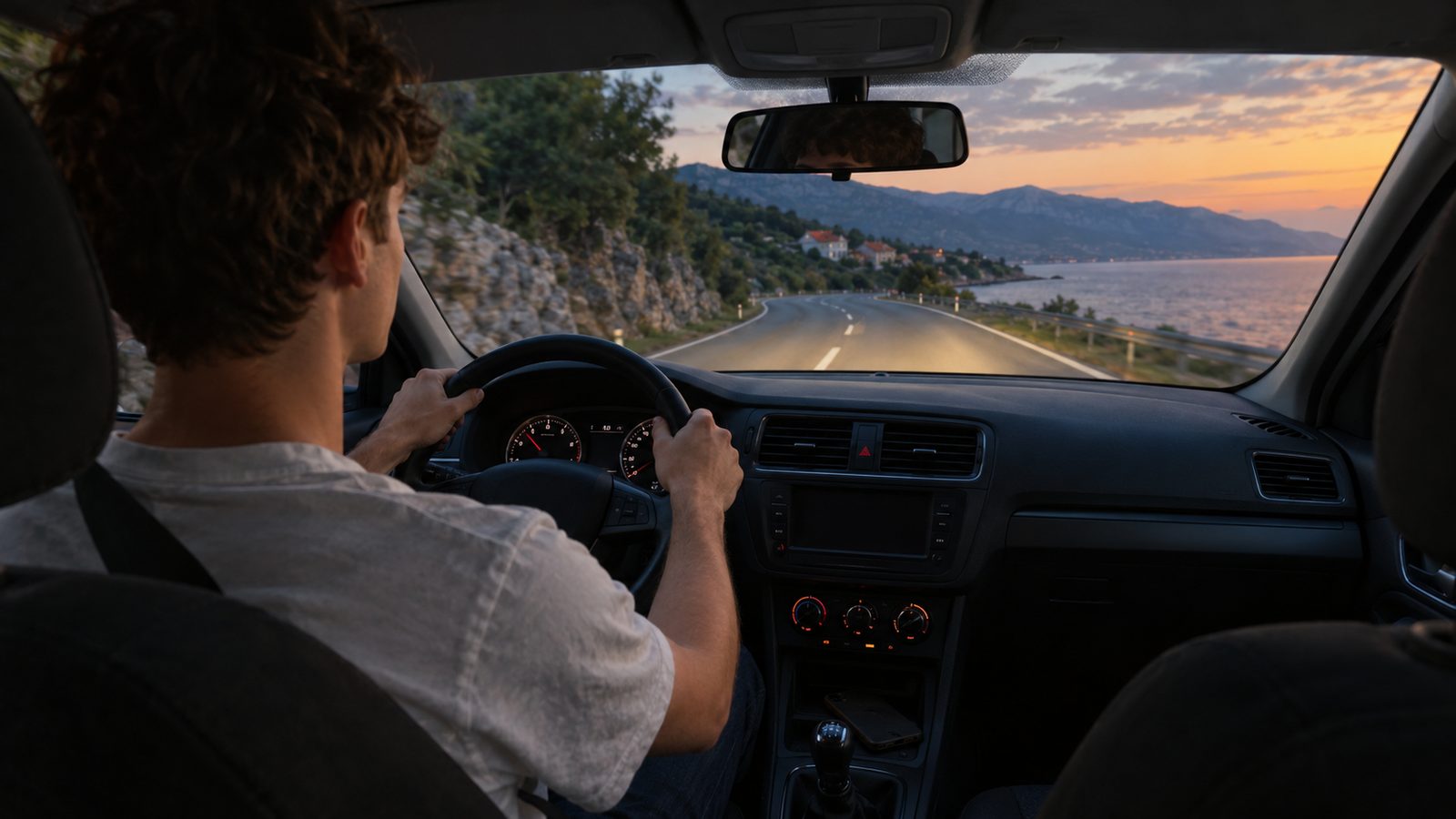
Our conclusion
Your first car doesn’t have to be the newest or the most powerful – it has to be reliable, affordable and safe. Buy without rushing, count the real costs and take someone who knows cars. And on the road: zero alcohol, zero drugs, phone away – and drive so that everyone who gets in with you gets home. That’s the coolest thing you can do behind the wheel. Safe travels!
Note: this article is for general information only (as of October 2026). Legal requirements can change and differ from country to country – the law in force always prevails.